


Last Updated: November 24, 2026
Quick Summary
Pizza toppings slide mainly because of moisture, too much sauce, and a crowded surface. Keep the sauce to a thin layer, use a light base of low-moisture cheese, pre-cook wet vegetables, and dust your peel with semolina before launching.
- Spread sauce in a thin layer that stops about half an inch from the edge.
- Use low-moisture mozzarella as a light base layer, since fresh mozzarella releases whey.
- Pre-cook mushrooms and peppers to drive off water before they go on the pizza.
- Dust the peel generously with semolina or cornmeal so the pizza slides off cleanly.
- Let a finished pizza rest two to three minutes before cutting so the layers can bond.
Table of Contents
- How to Stop Pizza Toppings Spilling Before You Bake
- Why Pizza Toppings Slide Off
- How Much Sauce to Put on Pizza
- Pizza Topping Order: Cheese, Toppings and Layering
- Step-by-Step: Assembling a Pizza That Holds Its Toppings
- How to Stop Pizza Sticking to the Peel
- Troubleshooting: Diagnosing Toppings That Still Slide
- Setting Up Your Next Pizza Night With a Sliding Peel
- Frequently Asked Questions
How to Stop Pizza Toppings Spilling Before You Bake
Pizza toppings slide off mostly because of moisture, too much sauce, and a crowded surface. Stop them early by controlling those three things before the pizza ever touches the peel. Pizza toppings stay put when the dough is dry enough, the sauce is light, and the layers are built in the right order.
A sliding peel can help with the transfer step, but most of the fix happens at your counter. Below, we walk through the causes, the sauce and cheese choices, the assembly order, and the peel technique that keeps everything in place.
Why Pizza Toppings Slide Off
Toppings slide when the surface under them is wet, slick, or overloaded. A pizza is basically a thin layer of dough with a sticky layer on top. When that sticky layer gets too thin or too wet, the toppings lose their grip and move.
Common causes include:
- Wet vegetables: Mushrooms, zucchini, and peppers release water as they heat.
- Thin or runny sauce: Watery sauce acts like a lubricant under the cheese.
- Too much oil: Oil on the dough makes everything slip.
- Cheese that melts into a puddle: Some cheeses pull away from the crust as they cool.
Watch out: a pizza that slides on the peel is often one that was loaded too heavily. Adding more toppings just makes the sliding worse.
How Much Sauce to Put on Pizza
Use a thin, even layer of sauce for a 12-inch pizza. Spread it to within about half an inch of the edge. Too much sauce soaks the dough and gives toppings nothing to hold onto.
A thicker sauce also helps. If your sauce is runny, simmer it for a few minutes to reduce it before you spread it. You want it spreadable, not soupy.
Pizza Topping Order: Cheese, Toppings and Layering
The order you add ingredients matters because each layer changes how much grip the next one has. A pizza is a stack of materials with different moisture and fat content, and the layer directly under the toppings is the one doing the holding. Put a wet layer under a heavy topping and it slides; put a tacky, semi-melted layer under it and it stays.
A common assembly order for home pizzas:
- Thin sauce layer first, leaving a border. Sauce is the wettest layer, so keep it thin and stop about half an inch from the edge.
- A light base layer of low-moisture cheese. This is the adhesion layer. Shredded low-moisture mozzarella melts into a continuous sheet that grips the toppings above it.
- Drained or pre-cooked vegetables. They go on the cheese, not under it, so any remaining water vents upward instead of pooling against the dough.
- Meats last among the heavy toppings. They are dense and release fat as they cook; putting them on top lets that fat run off rather than soak the layer below.
- A small finishing sprinkle of cheese. A light top layer helps bind loose pieces without adding enough weight to cause slip.
When to put toppings under the cheese. Some styles intentionally place toppings beneath the cheese: a classic Detroit-style or pan pizza often lays pepperoni or vegetables on the dough and covers them with cheese so the cheese anchors everything. This works because the cheese melts into a solid cap. It does not work well on a thin-crust pizza launched from a peel, where the extra weight and moisture under the cheese can make the whole stack slide during transfer. Match the order to the style, not to habit.
Cheese choice changes the grip. Fresh mozzarella holds far more water than low-moisture mozzarella, so it releases a pool of whey as it melts and can lift away from the crust. Pat fresh mozzarella dry with a paper towel, tear it into smaller pieces, and use it sparingly, or blend it with low-moisture cheese. Low-moisture mozzarella and brick-style cheeses melt into a more cohesive layer and are the safer choice when toppings keep sliding.
Balance the layers by weight, not by eye. A common pattern is that the sauce and cheese together should be a thin, even base, and the toppings should sit in a single layer with visible gaps. If you cannot see any sauce or cheese between the toppings, the pizza is overloaded and the bottom layer cannot grip. Keep each layer light, spread toppings out rather than stacking them, and remember that heavy layers trap moisture and make the pizza harder to move.
Step-by-Step: Assembling a Pizza That Holds Its Toppings
- Dust your peel. Use semolina or coarse cornmeal so the dough can slide.
- Stretch your dough. Keep the center a little thinner than the edge. Avoid heavy oil on the surface.
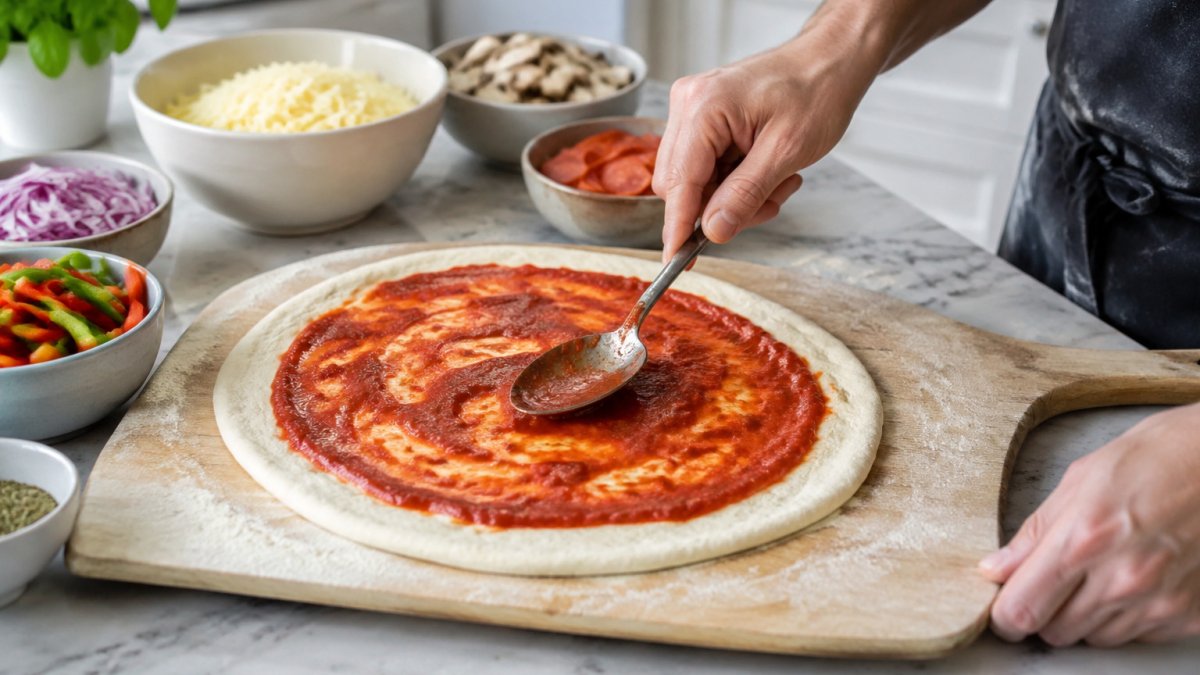
- Spread a thin sauce layer. Stop about half an inch from the edge.
- Add the cheese. Use a light, even layer.
- Pre-cook wet vegetables. Sauté mushrooms and peppers to drive off water before they go on the pizza.
- Add toppings in order. Spread them out, and do not stack them.
- Check the peel. Give the pizza a small test shake. If it moves easily, it is ready.
Hands in a home kitchen spreading a thin layer of tomato sauce on a stretched dough round resting on a wooden peel, with a bowl of shredded cheese and toppings nearby. | section:Step-by-Step: Assembling a Pizza That Holds Its Toppings
Shredded cheese from a bag often contains anti-caking starch, which can make the cheese melt unevenly. Grating a block by hand usually gives a more consistent layer.
The assembly steps below set out what to do at each stage so the toppings stay put.
| Step | What to do | Time or frequency |
|---|---|---|
| Dust your peel | Use semolina or coarse cornmeal | Before stretching dough |
| Stretch dough | Keep centre thinner than edge; avoid heavy oil | During stretching |
| Spread sauce | Thin layer, stop about half an inch from edge | Single thin layer |
| Add cheese | Light, even layer | Single light layer |
| Pre-cook wet vegetables | Sauté mushrooms and peppers to drive off water | Before adding to pizza |
| Add toppings | Spread out, do not stack | In order, spread out |
| Check the peel | Give a small test shake; ready if it moves easily | Before launching |
How to Stop Pizza Sticking to the Peel
Sticking usually happens when the dough is too wet, the peel is not dusted enough, or the pizza sits too long before going into the oven. Work quickly once the pizza is assembled.
Try these fixes:
- Dust the peel generously with semolina or cornmeal.
- Give the dough a short rest so the surface is not tacky.
- Launch the pizza with a quick, confident shake.
- Slide the peel in at a low angle, then pull it back in one smooth motion.
King Arthur Baking guide to pizza dough handling
Troubleshooting: Diagnosing Toppings That Still Slide
Most topping problems have a timing signature. When the toppings move tells you which layer failed. Use the symptom below to narrow the cause before changing your recipe.
Toppings slide during transfer to the oven. This is a peel and dough-surface problem, not a topping problem. The dough is tacky, the peel is under-dusted, or the pizza sat too long and absorbed moisture. Dust with semolina or coarse cornmeal, assemble quickly, and give the peel a short test shake before launching.
Toppings slide or spread apart during baking. The base layer lost its grip as it melted. Likely causes: sauce too thin or too heavy, too much oil on the dough, or fresh mozzarella releasing whey. Reduce and simmer the sauce, cut back the oil, and switch to or blend in low-moisture cheese.
Cheese pulls away from the crust and leaves a bare ring. This is usually too much cheese or a high-moisture cheese that shrank as it cooled. Use a lighter, even layer and a lower-moisture cheese, and avoid piling cheese in the center.
The center sags and toppings pool toward the middle. The dough is too thin in the center or overloaded. Keep the center slightly thicker than the rim, and reduce the total topping load so the base can support it.
Toppings slide off after slicing. The pizza did not set before cutting. Let it rest two to three minutes so the cheese firms and the layers bond, and use a sharp cutter with a firm, single pass rather than a sawing motion that drags toppings.
Toppings slide after the pizza cools. Cooling causes cheese to contract and release from the crust, especially with high-moisture cheese or an oily surface. If you plan to serve later, use low-moisture cheese, go lighter on oil, and reheat on a dry surface rather than adding more fat.
If the same symptom keeps returning, change one variable at a time: sauce thickness, then cheese type, then topping load. That sequence isolates the cause faster than adjusting everything at once.
Setting Up Your Next Pizza Night With a Sliding Peel
A sliding peel can make it easier to get a loaded pizza into the oven. For more detail on the transfer, see our guide on how to stop pizza dough from sticking.
Before your next pizza night, set up a clean workspace, dust the peel, and prep your toppings ahead of time. ElitePeel's sliding peel is designed to help toppings stay where you put them. If the launch still goes wrong, our diagnostic guide to pizza tears walks through the most common causes. For a fuller look at the tool itself, read whether a sliding pizza peel is worth it, or see our best pizza peel for wood fired ovens.
Shop the ElitePeel collection to find a sliding peel that fits how you cook.
Frequently Asked Questions
How do you keep cheese from sliding off pizza?
Cheese slides when there is too much moisture underneath it or when it sits on a thick, wet layer of sauce. Use a thinner, less watery sauce, spread it to within about half an inch of the edge, and drain fresh mozzarella on paper towels before slicing. Shred low-moisture mozzarella rather than using wet fresh balls, and bake the crust until it is fully set before adding heavy toppings. Letting the assembled pizza sit on the peel for a few seconds before sliding it in also helps the cheese settle and bond.
Should toppings go under or over the cheese?
Most home cooks put cheese down first, then toppings on top, because the cheese acts as a glue that holds smaller pieces in place. Heavier, wetter toppings such as sausage or raw vegetables are often better placed over a cheese layer so they sit on a stable surface. Vegetables that release water should be pre-cooked or pressed dry before they go on, otherwise they will weigh down and slide the cheese beneath them.
How much sauce should you put on a pizza?
For a 12-inch pizza, a good starting point is roughly 3 to 4 tablespoons of sauce spread in a thin layer that stops about half an inch from the edge. Too much sauce creates a wet surface that lets toppings and cheese slide, and it can make the crust soggy in the middle. A thicker, reduced sauce gives more grip than a thin, watery one, so simmer or strain your sauce if it looks loose before spreading.
How do you stop pizza toppings from spilling in the oven?
Limit the topping load to what the pizza can carry, usually a few modest handfuls of toppings on a 12-inch pie rather than a heaped layer. Launch the pizza onto a stone or steel that is fully preheated, and give the peel a quick back-and-forth shake before you pull it out so the pizza sits freely. Once in the oven, avoid opening the door repeatedly, since the rush of cooler air can shift the toppings and sag the cheese.
