


Last Updated: October 30, 2026
Quick Summary
A sliding pizza peel is worth it if launching raw dough is your recurring failure point, since the nonstick tarp carries the pie and releases it cleanly. Skip it if you already launch well with a regular peel, bake Neapolitan-style pies that need fast turning, or are short on storage.
- Most bakers launch cleanly with a sliding peel within the first couple of pies.
- A regular peel is faster for experienced hands because one tool builds, launches, turns and retrieves.
- ElitePeel replacement tarps run $17.99, so ongoing cost stays low but is not zero.
- The 5 year warranty extension covers defects beyond the standard 1-year warranty.
- The best setup pairs a sliding peel for launching with a regular peel for turning and retrieval.
Table of Contents
- The Real Question: What a Sliding Pizza Peel Actually Fixes
- Sliding Pizza Peel vs Regular Peel: Where Each One Wins
- How to Use a Sliding Pizza Peel Without a Failed Launch
- Choosing a Pizza Peel for Wood-Fired Oven Heat
- Deciding If the Upgrade Fits Your Pizza Night
- Frequently Asked Questions
The Real Question: What a Sliding Pizza Peel Actually Fixes
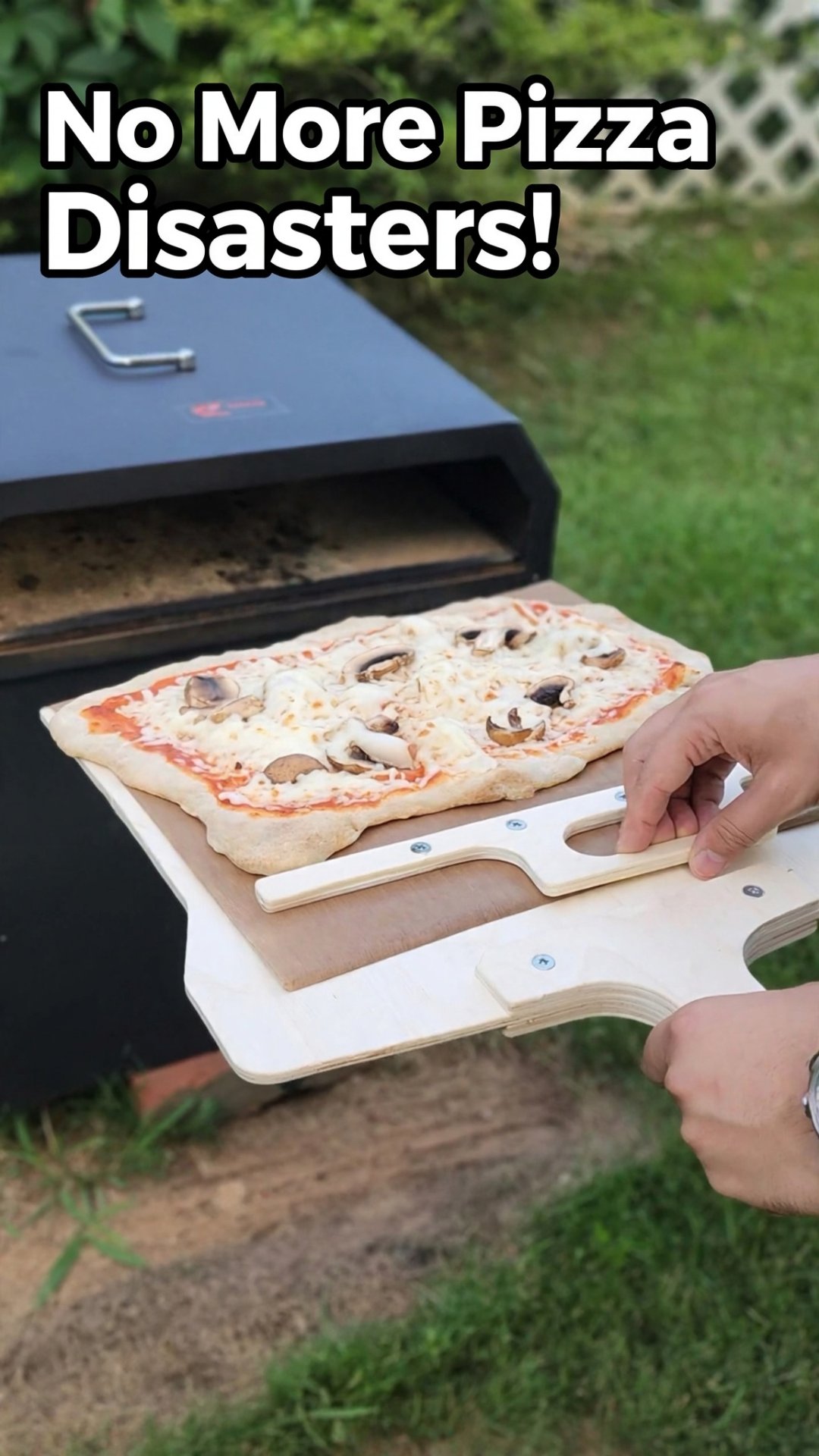
A sliding pizza peel is a two-part launching tool: a frame that holds a thin, nonstick tarp, so the raw pizza rides on the tarp instead of resting directly on wood or metal.
That moment is where most home bakes go wrong. Toppings shift, crusts fold, flour burns, and dinner becomes a calzone.
Below, we break down what a sliding peel genuinely fixes, where a regular peel still wins, and who should skip the upgrade. If you already know you want the tarp system, you can browse the replacement tarps that keep it working.

Sliding Pizza Peel vs Regular Peel: Where Each One Wins
A sliding peel wins on launching; a regular peel wins on everything else. Here is the comparison across launch success, learning curve, speed, cleanup, storage, and cost.
A conventional wood or metal peel is one rigid surface you build, launch, turn, and retrieve from. A sliding peel splits those jobs: a frame holds a thin, nonstick tarp that carries the raw pizza onto the stone or steel while the frame stays behind.
Criterion |
Sliding Peel |
Regular Wood or Metal Peel |
|---|---|---|
Launch success on raw dough |
High, the tarp carries the pie and releases it |
Technique-dependent; a thick edge or sticky dough causes failures |
Learning curve |
Short, most bakers launch cleanly within a few pies |
Steeper, flour discipline and a confident shake take practice |
Speed per pizza |
Super fast, slide the peel under the pie, place the peel in the oven/on the stone, and slide it out. |
Slow, technique is important |
Turning a baking pie |
Awkward, the frame is not built for it, use a turning peel for best results |
Natural, the rigid surface turns and retrieves |
Removing a finished pie |
Not its job; pair with a turning peel or metal peel |
Designed for it |
Cleanup |
Tarp wipes or rinses; frame needs occasional washing |
Flour dusting and scraping; wood needs drying |
Storage footprint |
Slim, hangs or leans against wall |
Bulkier |
Upfront cost |
Higher, frame plus replacement tarps |
Lower, one piece of wood or metal |
Ongoing cost |
Replacement tarps as they wear |
Essentially none |
Launch Success: The One Metric That Matters
Launch success is why sliding peels exist, and the gap is widest here. With a regular peel, a clean launch depends on three things at once: enough surface flour, a fast confident shake, and a thin enough edge to get under the dough.
A sliding peel removes two of those three variables. The tarp provides a consistent nonstick surface, so flour discipline matters less, and it slides forward to deposit the pie rather than requiring you to shake it off a rigid surface.
Speed, Cleanup, and Storage: Where the Regular Peel Pulls Ahead
The trade-off shows up after the launch. A regular peel is one tool that builds, launches, turns, and retrieves, so an experienced baker moves from pie to pie without switching equipment.
Cleanup favors the regular peel on simplicity. A wood peel needs flour dusted off and thorough drying so it does not warp; a metal peel wipes clean. A sliding peel's tarp wipes or rinses quickly, but the frame has joints that collect flour.
Cost of Ownership: Upfront vs Ongoing
A regular peel is a one-time purchase. A sliding peel is a system: the frame plus replacement tarps as they wear. ElitePeel replacement tarps run $17.99, so ongoing cost stays low but is not zero. The 5 year warranty extension covers defects in materials and workmanship from the date of purchase, beyond the standard 1-year warranty.

Wood, Metal, and the Edge That Decides the Launch
Edge thickness matters more than most buyers realize. Wood grips raw dough slightly better and resists sticking on a well-floured surface. Metal slides under more easily and survives high heat without charring. Perforated metal reduces contact area so excess flour falls away, which helps with stickier dough. These differences matter most for a regular peel, where the edge does the work; on a sliding peel the tarp handles release, so the frame's material is more about heat survival and durability.
ElitePeel Sliding Pizza Peel Replacement Tarps →
How to Use a Sliding Pizza Peel Without a Failed Launch
Build the pizza on the tarp, not on the frame, and keep the topped pie moving until launch. A failed launch almost always traces back to dough sitting still long enough to bond with the surface.
(/blogs/news/how-to-fix-sticky-pizza-dough) walks through the adjustments that solve it at the source.
Choosing a Pizza Peel for Wood-Fired Oven Heat
Heat changes the calculus. A wood-fired oven runs far hotter than a home oven, so the peel has to survive intense radiant heat at the mouth without warping, scorching, or transferring flavor.
Handle length and grip matter just as much: you need enough reach to get the pie deep into the oven while keeping your hands clear of the flame.
For a deeper comparison of high-heat options, see our guide to the best pizza peel for wood fired oven setups.
Deciding If the Upgrade Fits Your Pizza Night
Here is the direct verdict, broken down by who you are and how you bake.
Buy the Sliding Peel If...
- Launching is your recurring failure point. If your pies consistently stick, fold, or lose their toppings on the way to the stone or steel, the tarp system targets exactly that moment.
- You are new to pizza making. Most home bakers get a clean launch within the first couple of pies instead of practicing through a run of failed ones.
- You bake high-hydration doughs or heavily topped pies. The tarp reduces sticking, though it does not eliminate the need to manage hydration and restraint.
Skip It If...
- You already launch cleanly with a regular peel. The sliding peel solves a problem you do not have, and you would trade speed and storage for no gain.
- You bake Neapolitan-style pies that demand fast turning and retrieval. A conventional peel remains the better tool at high heat; a sliding peel is not a replacement for a turning peel.
- You are tight on storage. A slim peel hangs or leans; a sliding peel's frame takes up more space.
The Middle Ground: Pair, Don't Replace
The most practical setup for most home bakers is not sliding peel or regular peel, it is both. Use the sliding peel to launch the raw pie onto the stone or steel, then switch to a turning peel or metal peel for the bake and retrieval. That pairing captures the launch success of the tarp system without giving up the turning and retrieval performance of a rigid peel.
The Cost Question, Answered Directly
ElitePeel replacement tarps run $17.99, and the 5 year warranty extension covers defects in materials and workmanship from the date of purchase, beyond the standard 1-year warranty. If you bake once a month and already launch cleanly, the upfront cost is harder to justify.
Frequently Asked Questions
Is a sliding pizza peel worth buying for a beginner?
For most beginners, yes, with a caveat. You still need to practice the motion and manage dough hydration. If you make pizza fewer than a few times a year, a basic metal peel and good flour technique may be enough.
How is a sliding pizza peel different from a regular peel?
A regular peel is a flat board, usually wood or metal, that you build the pizza on and slide under the crust to turn or remove it. A sliding pizza peel carries the raw pizza on a moving surface, often a high-temperature non-stick tarp, so the pie transfers onto the stone or steel without the flour-and-jerk launch. In practice, the sliding pizza peel vs regular peel trade-off comes down to launch reliability versus turning and retrieval. Many cooks keep both: a sliding peel for launching, a conventional peel for turning and pulling.
What are the disadvantages of a sliding pizza peel?
Three things come up. First, the learning curve: you still have to time the slide and manage toppings. Second, durability questions: a supplied Freakin' Reviews summary reported loose threads and material degradation after one use on a reviewed sliding peel, though it did not name the product or compare brands broadly. Third, you may still need a separate turning peel for the oven. Check the warranty before buying. ElitePeel includes a 1-year warranty on materials and workmanship, and a 5-year extension is available for $15.00.
Will a sliding pizza peel work in a wood-fired oven?
It can, but the oven changes the plan. Wood-fired ovens run hotter than indoor ovens, so the launch window is shorter and you need a peel sized to your oven floor and pizza diameter. A sliding peel handles the launch; a small turning peel is still the practical tool for rotating the pie in high heat. ElitePeel's replacement tarps are built from high-temperature resistant fiberglass mesh with a food-safe non-stick coating.
Launching is the hardest skill in home pizza making, and it is the one place where the right tool changes the outcome fastest. ElitePeel's sliding pizza peel is built for that single job, with a nonstick tarp design that keeps toppings in place and crusts round, backed by a 30-day money-back guarantee and a 1-year warranty. Get started with ElitePeel and take the guesswork out of your next pizza night.
