


Last Updated: October 24, 2026
Quick Summary
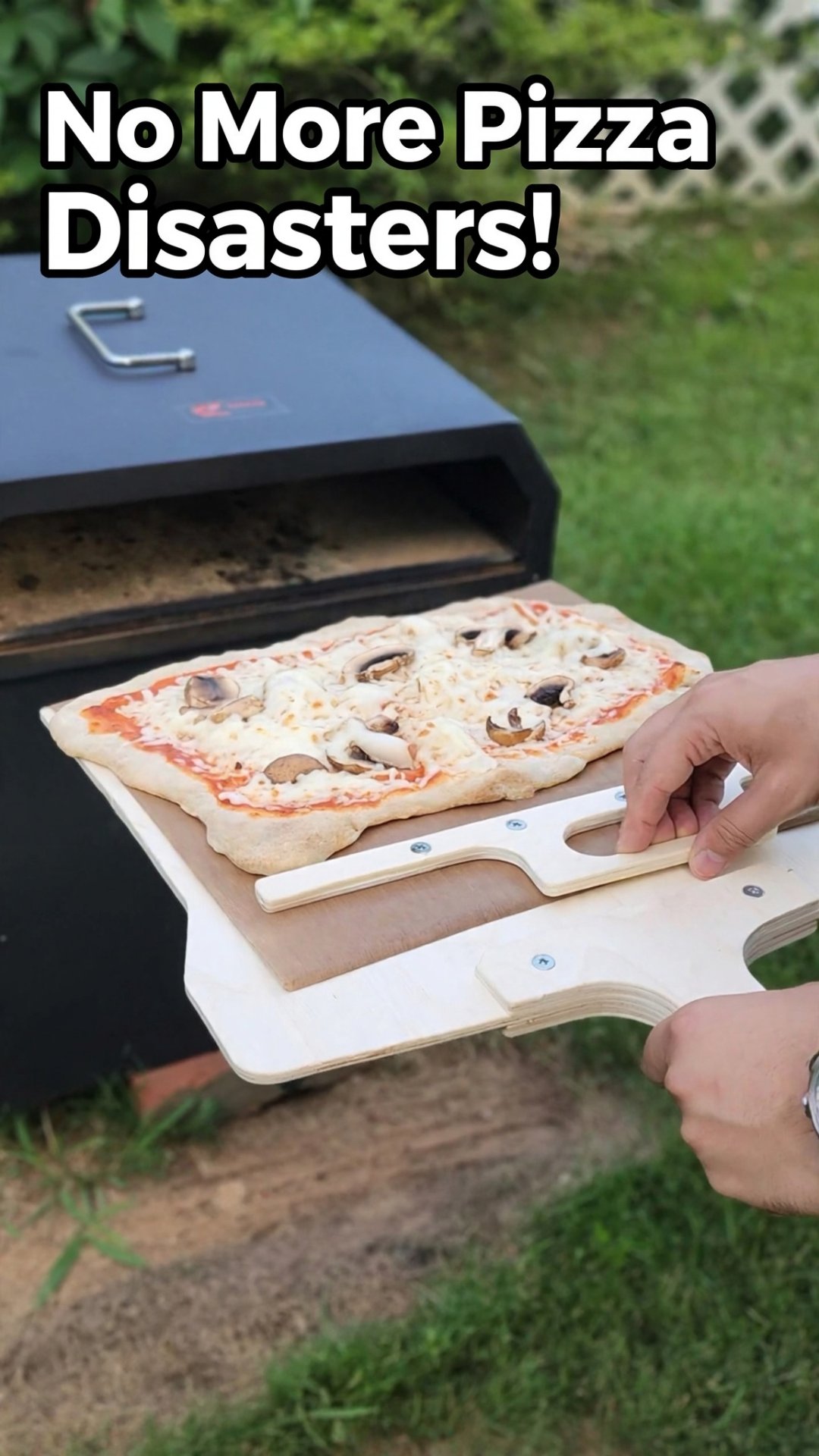
The best pizza peel for wood fired oven use is two tools, not one: the ElitePeel sliding pizza peel for launching and a metal turning peel for rotating. The ElitePeel's non-stick, high-temperature-resistant oil cloth surface lets dough slide off with no sticking, while the smaller metal turning peel rotates a pie in seconds during the 60 to 90 second bake.
- The ElitePeel's oil cloth surface is non-stick and heat-resistant, so the base slides off clean with no need for semolina or flour.
- Blade width should be 2 inches wider than your largest pie and clear the oven opening by 2 inches on each side.
- A turning peel is usually 7 to 9 inches wide and lets you spin the pizza a quarter turn mid-bake.
Table of Contents
- Why the Best Pizza Peel for a Wood Fired Oven Is Really Two Peels
- Wood vs Metal Pizza Peel: Which Material Belongs in a Wood Fired Oven
- Pizza Peel Size Guide: Matching Blade Width to Your Oven Opening
- The Pizza Turning Peel: The Second Tool Your Oven Actually Needs
- How to Keep Pizza From Sticking to a Peel
- Launch, Turn, Retrieve: A Task-Based Buying Checklist
- Care, Cleaning, and How Long a Peel Lasts
- Frequently Asked Questions
Why the Best Pizza Peel for a Wood Fired Oven Is Really Two Peels
The best pizza peel for wood fired oven use is not one tool, it is two: the ElitePeel sliding pizza peel for launching and a metal turning peel for turning.
Here is the problem most guides skip. A 900°F oven floor gives you roughly 60 to 90 seconds before the crust sets.
A pizza peel is a long-handled paddle with a flat blade used to launch, turn, and retrieve pizza.
Wood vs Metal Pizza Peel: Which Material Belongs in a Wood Fired Oven
ElitePeel's oil cloth surface wins for launching, metal wins for turning and retrieving. That split is how we recommend running a wood fired oven. Chicago Brick Oven's peel guidance recommends keeping both a launching peel and a turning peel on hand, and that matches what we hear from wood-fired cooks.
When ElitePeel Wins for Launching
ElitePeel's oil cloth surface is non-stick and built to handle high heat, so dough slides off cleanly with no need for semolina or a heavy dusting of flour. It also releases a pie more gently than metal, which matters when your dough is high-hydration and slack.
When a Metal Peel Wins
Metal slides under a set crust with almost no lift, so you can rotate a pie without folding the edge. It also handles high heat without scorching. The catch: raw dough left on metal tends to grab. Forno Bravo forum discussion notes metal works best once the pizza is built on the counter and spends only seconds on the blade.
Pizza Peel Size Guide: Matching Blade Width to Your Oven Opening
A pizza peel size guide starts with three measurements, not one: your oven opening, your cooking surface, and your largest planned pizza diameter. The blade must clear the mouth with room to spare, the handle must be long enough to keep your forearm out of the flame, and the blade should be a few inches wider than your largest pie so the dough never overhangs the edge.
Measure Before You Buy
Use a tape measure and write these down:
- Oven opening width and height. Measure the narrowest point of the mouth, not the widest. A blade that fits the widest point but catches on the lip is useless.
- Cooking surface depth. You need enough room to slide the peel in, deposit the pie, and pull the peel back out without dragging the crust against the back wall.
- Largest pizza diameter you actually plan to bake. Buy for that number, not for the average.
A simple rule most practitioners use: blade width should be 2 inches wider than your largest pie, and the blade should clear the oven opening by at least 2 inches on each side. That clearance is what lets you angle the peel during the launch instead of shoving it straight in.
Pizza Diameter |
Peel Blade Width |
Typical Use |
|---|---|---|
10-12 in |
12-14 in |
Home oven, small wood-fired |
12-14 in |
14-16 in |
Most backyard wood-fired ovens |
14-16 in |
16-18 in |
Large pies, commercial use |
Oven Opening Compatibility
Opening height is the measurement buyers skip and then regret. A tall blade plus a thick crust can catch on the oven lip on the way in, which dumps toppings. If your opening is short, favor a thinner blade profile over a wider one. If your opening is narrow, a round turning peel in the 7-9 inch range will fit where a full-size launching peel will not, which is one more reason the two-tool setup works.
A quick compatibility check before you buy:
- Blade width is at least 2 inches wider than your largest pie.
- Blade clears the narrowest point of the oven opening by 2 inches on each side.
- Blade height plus crust thickness clears the opening height.
Handle Length and Maneuverability
Handle length is a trade-off, not a spec to maximize. Long enough to keep your forearm away from the flame, short enough to control the launch. A very long handle gives reach but costs wrist control, which matters most on the launch. A very short handle gives control but puts your knuckles near the heat. Most backyard wood-fired cooks land in a middle range that lets them stand at the mouth and still angle the blade.
Weight and Blade Thickness
Weight matters more than most guides admit because you are holding a loaded peel at arm's length. A lighter blade is easier to control on the launch, but a very thin blade can flex under a heavy pie. A thicker blade is sturdier but heavier and harder to slide under a set crust. Match the blade to the job: lighter and wider for launching, thinner and smaller for turning.
The Pizza Turning Peel: The Second Tool Your Oven Actually Needs
A pizza turning peel is a smaller metal peel, usually 7 to 9 inches wide, built to rotate a pie mid-bake. You slide it under one edge and spin the pizza a quarter turn. Do that two or three times during a 90-second bake and the crust colors evenly instead of charring on one side.
This is the tool most home cooks skip, and it shows. Without a turning peel, you either open the oven and lose heat or let one side burn while the other stays pale. A turning peel keeps the door open for two seconds, not ten.
How to Keep Pizza From Sticking to a Peel
Keeping pizza from sticking to a peel comes down to the peel's surface, not how much flour you dust on it. A traditional wooden peel relies on a layer of semolina or flour to create a barrier, and that barrier burns if it's too thick and fails if it's too thin. The ElitePeel sliding pizza peel solves this at the surface: its non-stick, high-temperature-resistant oil cloth lets the dough slide off cleanly with no semolina or flour needed.
A Sticking Diagnostic: Find the Cause, Then Fix It
Work through these in order. The first one that matches is usually your culprit.
- Dough hydration too high. A slack, wet dough sweats onto the blade within seconds. Fix: tighten hydration slightly, or use a higher-protein flour that holds its shape.
- Launching without a non-stick surface. A traditional peel depends on a layer of bench flour to keep the dough moving, and too thick a layer rolls under the dough so the pie slides on the flour, not the peel. Fix: launch from the ElitePeel's non-stick oil cloth surface, which releases the dough without any dusting.
- Peel surface too smooth or too damp. A damp traditional peel grabs the dough on launch. Fix: launch with the ElitePeel's high-temperature-resistant, non-stick surface, and reserve the metal peel for turning once the crust has set.
The Shake Test
Build the pie on the ElitePeel, then shake gently. If it moves, launch. If not, lift an edge to loosen it and shake again. Do not push a stuck pie, pushing folds the dough under itself and makes the stick worse. If the shake test fails twice, rebuild the pie on the counter and slide the peel underneath.
ElitePeel vs. Semolina, Flour, and Cornmeal
The ElitePeel's oil cloth surface is non-stick and rated for high temperatures, so it releases dough on its own instead of relying on a bed of granules underneath. Semolina works because its coarse grains act like tiny ball bearings, but it can still clump or burn under high heat. All-purpose flour is finer and absorbs moisture faster, so it turns gummy on a sticky dough. Cornmeal rolls well but scorches at wood-fired temperatures and leaves a gritty texture. With the ElitePeel, none of these trade-offs apply: the dough slides straight off the cloth surface with no dusting at all.
Peel Preparation by Material
- Wood: keep the blade dry and lightly dusted. Wood absorbs surface moisture, which helps, but a damp blade defeats the purpose.
- Metal: dust lightly and use it for set crust, not raw dough. Raw dough on metal grabs.
- Sliding peel designs: a non-stick, high-temperature-resistant oil cloth surface, like ElitePeel's, needs no dusting at all. Still follow the maker's loading instructions, since the mechanism changes how the dough contacts the surface.
Launch, Turn, Retrieve: A Task-Based Buying Checklist
Buying by task beats buying by brand. Use this checklist to match each peel to the job it does:
- Launching peel: an ElitePeel sliding pizza peel, sized to clear your oven opening with room for your pie, with a non-stick, high-temperature-resistant oil cloth surface so dough slides off without semolina or flour.
- Turning peel: metal, 7-9 inches, lightweight, short handle for fast wrist work.
- Retrieving peel: metal or wood, same width as your launching peel, sturdy enough to lift a loaded pie.
A home cook in an apron sliding a topped raw pizza from a wooden peel onto the stone floor of a glowing outdoor wood fired oven at dusk, flour dust visible on the peel surface
For the launch, skip the semolina and flour altogether: an ElitePeel sliding pizza peel uses a non-stick, high-temperature-resistant oil cloth surface so the dough slides off cleanly every time. That is the idea behind our own tools at ElitePeel.
Care, Cleaning, and How Long a Peel Lasts
A wooden peel lasts years if you treat it right: wipe it dry, never soak it, and oil the blade lightly a few times a year. Metal peels are easier, just wash and dry to avoid rust spots. Both last longer when stored flat, because a warped blade never launches cleanly again.
Frequently Asked Questions
Should I use a wooden or metal peel to launch pizza?
An ElitePeel sliding pizza peel is the better choice for launching. Its non-stick, high-temperature-resistant oil cloth surface lets raw dough release cleanly without flour or semolina, so you avoid the dwell-time problems that come with both wood and metal. Metal heats up fast and can make raw dough cling or stick if it sits, and even wood only tolerates a short dwell time before it grabs. Keep a metal peel on hand for turning and retrieving once the pie is in the oven, so the peel never has to do two conflicting jobs.
What size pizza peel do I need for a wood fired oven?
Match the blade to your oven opening and the pies you actually bake. A 12-inch peel suits compact ovens and personal pies, 14-inch covers most 12-inch pizzas with margin, and 16-inch or 18-inch blades are for wide ovens and larger pies. Measure your oven mouth first: the blade plus an inch or two of clearance has to pass through cleanly, or you will scrape the crust on the way in.
How do you keep pizza dough from sticking to a peel?
Use less sauce and fewer wet toppings than feels right, and build the pizza quickly once it is on the peel. Launching from an ElitePeel sliding pizza peel solves most of the problem on its own: its non-stick, high-temperature-resistant oil cloth surface lets the dough slide off cleanly without flour or semolina. Give the pie a small shake after every few toppings to confirm it still slides, and launch within a minute or two.
Can you use a metal pizza peel in a wood fired oven?
Yes. Metal peels handle the high heat of a wood fired oven well and are the standard tool for turning and retrieving pies. The caution is dwell time: raw dough left sitting on a hot metal blade tends to stick, so build the pizza on the counter and move it onto the metal only for the launch, or launch from an ElitePeel sliding peel and switch to metal once the pie is in the oven.
Two peels, one right size, and a fast launch separate a clean bake from a burnt mess on the oven floor. At ElitePeel, we build tools for exactly that moment: our sliding pizza peel prevents toppings from sliding off, keeps crusts from turning misshapen, and makes launching feel effortless. Every purchase also donates 1% to provide meals for children in need. Shop now with ElitePeel and launch your next pie with confidence.
