


Last Updated: November 4, 2026
Quick Summary
Pizza dough sticking happens when moisture and starch bond with a hot or bare surface, so the fix starts with the surface. Dust your peel or pan with semolina, cornmeal, or a thin oil film, and keep the dusting thin enough that the surface still shows through.
- Dust a metal peel generously with semolina or flour before adding the dough.
- Use only a thin, 1 to 2 teaspoon coat of oil when working with pans and trays.
- Parchment paper is a common barrier for wet dough on a pan.
- Press dough out and let it rest 5 to 10 minutes before adding toppings.
- Drain wet toppings, since heavy or watery toppings can make dough stick to the pan.
Table of Contents
- Why Pizza Dough Sticks to Your Peel, Pan, or Stone
- Choosing Flour, Semolina, Cornmeal, or Oil for Dusting
- How to Keep Pizza Dough From Sticking to Metal Peel
- How to Stop Pizza Dough Sticking to Tray or Pan
- How to Keep Pizza Dough From Sticking to Hands While Shaping
- How to Keep Pizza Dough From Sticking Without Flour
- Fixing Dough That Is Already Stuck and Transferring Your Pizza
- Start Your Next Pizza Night With a Launch That Slides Clean
- Frequently Asked Questions
Why Pizza Dough Sticks to Your Peel, Pan, or Stone
Pizza dough sticking happens for one simple reason: moisture and starch meet a hot or bare surface and bond together. Most sticking problems trace back to a few causes, and once you know them, the fix is easy. The surface you use matters as much as the dough itself.
The most common causes are:
- Wet dough that is high in hydration and tacky to the touch
- Bare surfaces like untreated wood, metal, or stone
- Warm dough that has sat out too long and gotten soft
- Too little dusting between the dough and the peel or pan
Here is the key point: sticking is a surface problem more than a dough problem. A dough that slides freely on a well-dusted peel can stick badly on a bare pan. Check your setup before you blame the recipe.
Choosing Flour, Semolina, Cornmeal, or Oil for Dusting
The dusting material is a barrier, and each option builds a different kind of barrier. Pick based on the surface the dough will touch and how long it will sit there, not on what happens to be in the cupboard.
| Dusting Material | Best For | Amount to Use | Trade-offs |
|---|---|---|---|
| All-purpose or 00 flour | Quick dusting on a counter or a metal peel | A light pinch-to-sprinkle coat, roughly 1 to 2 teaspoons spread over a 12-inch area | Absorbs moisture fast and can scorch on an exposed peel in a hot oven; a heavy coat leaves a raw-flour taste |
| Semolina | Peels, especially for a crisp, gritty release | About 1 tablespoon spread thin over a 12-inch peel | Coarser grind rolls under the dough well; too much leaves a sandy texture on the base |
| Cornmeal | Pans, trays, and outdoor ovens | About 1 tablespoon for a sheet pan, less for a round pan | Ball-bearing release is reliable, but the grains burn dark at high heat and add a distinct crunch |
| Light coat of oil | Pans and trays only | 1 to 2 teaspoons wiped on with a paper towel | Helps release and browns the base, but too much fries the crust and can make it greasy |
A common pattern among home cooks is to keep two containers within reach: a small bowl of semolina for the peel and a shaker of flour for the counter. That way the peel gets the coarse release agent and the counter gets the fine one, and neither surface gets over-dusted.
Watch out: A thick layer of any dusting material insulates the dough from the hot stone or steel, so the base steams instead of browning. Spread the dusting thin enough that you can still see the surface underneath.
If you are working with a very wet, high-hydration dough, flour alone will absorb moisture and turn gummy within a minute or two. Semolina or cornmeal holds up longer because the coarse particles do not dissolve as quickly, which is why most practitioners reach for semolina on the peel and reserve flour for the counter.
How to Keep Pizza Dough From Sticking to Metal Peel
Metal peels are the most common cause of sticky pizza. The surface is smooth, but dough grips it easily when moisture is present. Here is a simple routine:
- Dust the peel generously with semolina or flour before you add the dough.
- Shape the dough on a floured counter, not directly on the peel.
- Shake the peel gently. If the dough slides, it is ready to launch.
- If it resists, lift an edge, add a bit more dusting underneath, and try again.
Many home cooks find that a sliding peel with non-stick tarps makes this step far easier. The ElitePeel Sliding Pizza Peel Replacement Tarps add a non-stick layer designed for high heat, so the dough releases cleanly without a heavy coat of flour. Product link placeholder: ElitePeel Sliding Pizza Peel Replacement Tarps

Watch out: Never leave a floured peel sitting in a hot oven for long. The exposed flour can scorch before the pizza goes in.
How to Stop Pizza Dough Sticking to Tray or Pan
A pan is a different problem from a peel because the dough stays on the surface for the entire bake. You are not looking for a quick release; you are looking for a barrier that survives 10 to 15 minutes of heat.
Match the method to the pan material.
- Aluminum sheet pans and dark steel pans: These heat fast and grip dough that is not protected. Wipe a thin film of oil across the entire pan, including the corners and up the sides, then dust lightly with cornmeal or semolina. The oil provides the release and the cornmeal keeps the dough from sliding while you press it out.
- Nonstick pans: Skip the cornmeal, which can scratch the coating. A thin oil film is enough, and parchment is a safe backup if the coating is older.
- Cast iron: Seasoned cast iron releases well when it is hot, so preheat the pan before the dough goes in. A light oil film plus a dusting of semolina works, but do not use parchment in a pan that will go under a broiler.
- Carbon steel and dark trays: These run hotter than aluminum, so reduce the oil slightly and watch the base during the last few minutes.
Use parchment when the dough is wet or the pan is questionable. Parchment paper is a common pan barrier for wet dough. Press the dough out on the parchment, slide the whole sheet onto the pan, and bake as usual. Trim the parchment so it does not overhang the pan edge, where it can char.
ElitePeel Sliding Pizza Peel Replacement Tarps →
Press, rest, then top. Press the dough out gently with oiled fingertips, let it rest in the pan for 5 to 10 minutes so the gluten relaxes, then add toppings. Toppings added to a cold, tight dough pull it back and create thin spots that stick and tear.
Check release before the bake. Lift one edge with a thin spatula or dough scraper before the pan goes in the oven. If the dough resists, work a little more oil or semolina underneath that edge and try again.
Watch out: Heavy or watery toppings, wet mozzarella, canned tomatoes with excess liquid, piles of vegetables, weigh the dough down and can cause it to adhere to the pan as it cooks. Drain wet toppings and keep the load moderate.
A round pizza stone is also a good option for home ovens and grills, since its surface holds heat well and releases dough cleanly when preheated and lightly dusted. Product link placeholder: Elitepeel Round Pizza Stone For Grill And Oven
How to Keep Pizza Dough From Sticking to Hands While Shaping
Hands cause a lot of sticking. Warm palms and tacky dough quickly form a gummy bond. A few habits make a big difference:
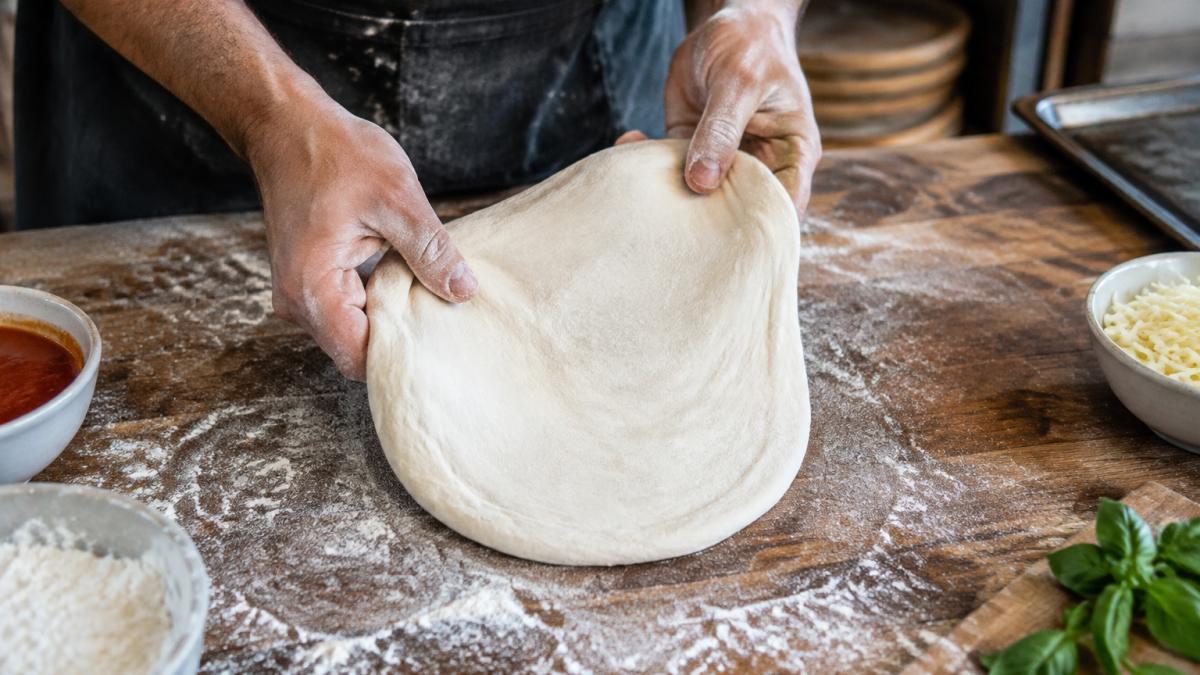
- Flour your hands before touching the dough
- Stretch from the center outward instead of pulling the edges
- Keep one hand dry for lifting and transferring
- Use a dough scraper to lift and move the dough without tearing it
A dough scraper helps you move the dough from the counter to the peel without tugging at it with your fingers. The Elitescraper Pizza Dough Scraper And Cutter is built for exactly this step. Product link placeholder: Elitescraper Pizza Dough Scraper And Cutter
How to Keep Pizza Dough From Sticking Without Flour
Some cooks prefer to skip flour, especially for high-hydration recipes where extra flour can change the texture. Here are flour-free options:
- Lightly oil your hands and the work surface
- Use a silicone baking mat on the counter
- Chill the dough for 15 to 20 minutes to firm it up
- Use parchment paper under the dough for easy transfer
Keep in mind that oil can make the crust softer and can fry the bottom in a very hot oven. Use only a thin film.
Fixing Dough That Is Already Stuck and Transferring Your Pizza
Stuck dough is frustrating, but you can often save it. Work slowly and avoid tearing:
- Lift one edge gently with a dough scraper.
- Slide a thin layer of flour or semolina underneath.
- Wait 30 seconds, then try the lift again.
- If the dough tears, pinch the tear closed and continue.
For a clean transfer, use this timed workflow: dust the peel, place the dough, add toppings within 60 seconds, then shake the peel to confirm the pizza moves freely before you launch it into the oven. For a more complete guide to moving pizza from peel to oven, see How to Fix Sticky Pizza Dough in 5 Simple Steps.
Start Your Next Pizza Night With a Launch That Slides Clean
Sticking is usually a surface and prep problem, and it is fixable. Match your dusting material to your setup, keep your hands and dough cool, and check that the pizza moves freely before launch. A sliding peel with non-stick tarps is one option for making the process easier. ElitePeel offers pizza tools designed to help you launch pizza cleanly.
Frequently Asked Questions
How do I get pizza dough to not stick?
Dust your peel, pan, or stone with a thin, even layer of flour, semolina, or cornmeal before you place the dough on it. Make sure the dough is not overly wet, since high hydration makes it tackier. Shape it on a lightly floured surface and give the peel a quick shake before launching. If the dough still grips, slide a bench scraper underneath to loosen it before adding toppings.
What type of flour is best for preventing pizza dough from sticking?
All-purpose flour and 00 flour both work well for dusting because they are fine and spread easily. Semolina gives extra grip against sticking and adds a slightly crunchy base, which many home bakers prefer for launching from a peel. Cornmeal works similarly but can leave a gritty texture on the crust bottom. Use a thin layer, since too much loose flour can burn on a hot stone.
How do I keep pizza dough from sticking to a metal peel?
Metal peels stick more readily than wood, so use a generous dusting of semolina or flour and make sure the peel is fully covered before the dough touches it. Shape the pizza with the peel slightly floured, then shake it gently to confirm the dough moves freely. Work quickly once toppings are on, because sauce and cheese increase moisture and friction on the metal.
Can I keep pizza dough from sticking without using flour?
Yes. A light coating of olive oil on your hands, bench, or pan can prevent sticking, though oil can make the crust slightly fried on the bottom. Parchment paper is another option for launching, and it can be slid onto a stone or pan with the pizza still on it. Oiled surfaces work best with lower-hydration dough, so adjust accordingly.
