


Table of Contents
- Why Aluminum Pizza Peels Need Different Care
- What You'll Need to Clean an Aluminum Pizza Peel
- Step-by-Step: How to Clean an Aluminum Pizza Peel
- How to Clean an Aluminum Pizza Peel with Vinegar
- How to Stop Pizza From Sticking to Metal Peels
- Removing Burnt-On Residue, Oxidation and Scratches
- Drying, Storing and Maintaining Your Peel for Long Life
- Choosing Replacement Tarps and Tools for Your Next Pizza Night
- Frequently Asked Questions
Last Updated: November 12, 2026
Why Aluminum Pizza Peels Need Different Care
Aluminum pizza peels are light, easy to handle, and quick to clean, but they need gentler care than wood or steel. The metal can dent, scratch, and discolor if you scrub it hard or leave it wet.
Learning how to clean an aluminum pizza peel the right way keeps it working well for many pizza nights. The steps below cover everyday cleaning, stuck-on residue, and drying and storage.
Here is the short version: wash with warm, soapy water, avoid abrasive scrubbers, and dry the peel completely before you put it away.
- Avoid the dishwasher, harsh oven cleaners, and steel wool.
- Use a soft sponge, warm water, and a mild dish soap.
- Dry the peel fully to prevent spotting and corrosion.
What You'll Need to Clean an Aluminum Pizza Peel
You don't need much to clean a peel well. Most of what you need is already in your kitchen.
- Warm water and a mild dish soap
- A soft sponge or non-abrasive cloth
- A bench scraper or plastic scraper for loose dough
- A clean, dry towel for drying
- A damp cloth for softening stuck-on residue
- Food-safe mineral oil (optional, for occasional seasoning of the surface)
If you want to tackle deep residue later, you can also keep white vinegar and baking soda on hand. We cover that method in its own section below.
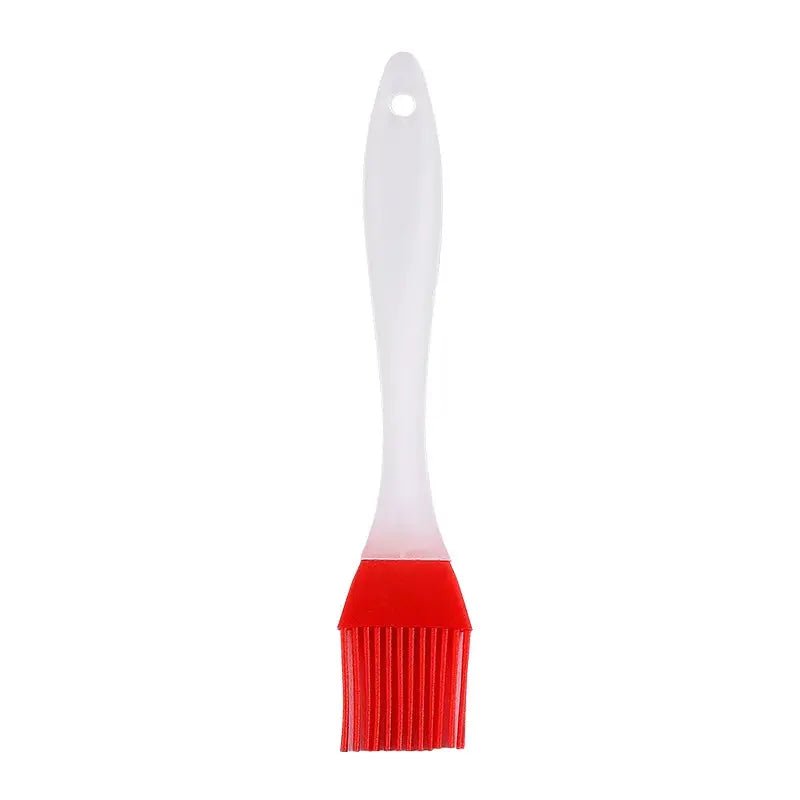
ElitePeel also sells an oil brush for $9.99. It's handy for applying a light coat of oil to the peel's surface after cleaning, which helps protect it between uses.
Step-by-Step: How to Clean an Aluminum Pizza Peel
Work through these steps after every use, or as soon as the peel has cooled enough to handle.
- Let the peel cool. Wait until it's safe to touch, but clean it while residue is still soft.
- Scrape off loose debris. Use a bench scraper or plastic scraper to lift dough bits and flour. Work gently so you don't scratch the metal.
- Wipe with a damp cloth. Dampen a cloth, lay it over any stuck spots for a minute, then wipe them away.
- Wash with warm soapy water. Use a soft sponge and a few drops of mild dish soap. Clean both sides.
- Rinse thoroughly. Remove all soap, since leftover soap can leave a film.
- Dry it completely. Wipe it with a clean towel, then air-dry for a few minutes before storing.
Watch out: Don't soak an aluminum peel for long periods or leave it wet in a closed bag or drawer. Trapped moisture is the main cause of spotting and corrosion.
How to Clean an Aluminum Pizza Peel with Vinegar
For stubborn residue, a vinegar soak can loosen buildup without harsh scrubbing. Many home cooks use a 50/50 mix of water and white vinegar, with a few spoonfuls of baking soda added. Soak the peel for about five minutes, then rinse and wash with mild soap as usual.
Keep the soak short. Long exposure to acid can dull the finish, so check the peel after a few minutes and rinse it off once the residue starts to lift.
Always dry the peel fully after using vinegar. Leftover acid residue can react with the metal over time.
How to Stop Pizza From Sticking to Metal Peels
Cleaning is easier when dough doesn't stick in the first place. A few habits help a lot:
- Dust the peel with semolina or cornmeal before you place the dough on it.
- Use enough flour to create a thin layer between the dough and the metal.
- Launch quickly and confidently so the dough slides off in one smooth motion.
- Keep the dough cool and firm if it's very wet or sticky, since soft dough clings more.
- Check the surface after each use and wipe away any residue before it hardens.
These steps reduce how often you need deep cleaning, which protects the finish over time.
Removing Burnt-On Residue, Oxidation and Scratches
Burnt cheese, sauce, and oil bake onto an aluminum peel in a way that plain soapy water won't lift. If you're dealing with burn marks or tears from launches, our pizza launch tearing fixes cover how to avoid and repair damage that cleaning can't fully remove.
Stage 1: Soften first. Lay a damp cloth over the burnt spot for five to ten minutes. Water alone loosens most baked-on sauce and cheese because the sugars and proteins rehydrate. Wipe with a soft sponge. If the spot is still hard, move to stage 2.
Stage 2: Baking soda paste. Mix three parts baking soda to one part water to make a thick paste. Spread it over the residue, let it sit for 10 to 15 minutes, then scrub gently with a soft sponge or a non-abrasive nylon brush. Baking soda is mildly abrasive, enough to lift carbon without gouging the metal, and it neutralizes acidic residue at the same time. Rinse thoroughly.
Stage 3: Short vinegar soak. For stubborn carbon, use a 50/50 mix of white vinegar and water. Soak only the affected area for about five minutes, then rinse and wash with mild dish soap.
Watch out: Never use oven cleaner, bleach, or chlorinated cleaners on aluminum. The caustic soda in oven cleaner attacks the metal, and chlorine reacts with aluminum to cause pitting and dark staining that cannot be polished out.
Oxidation and Discoloration
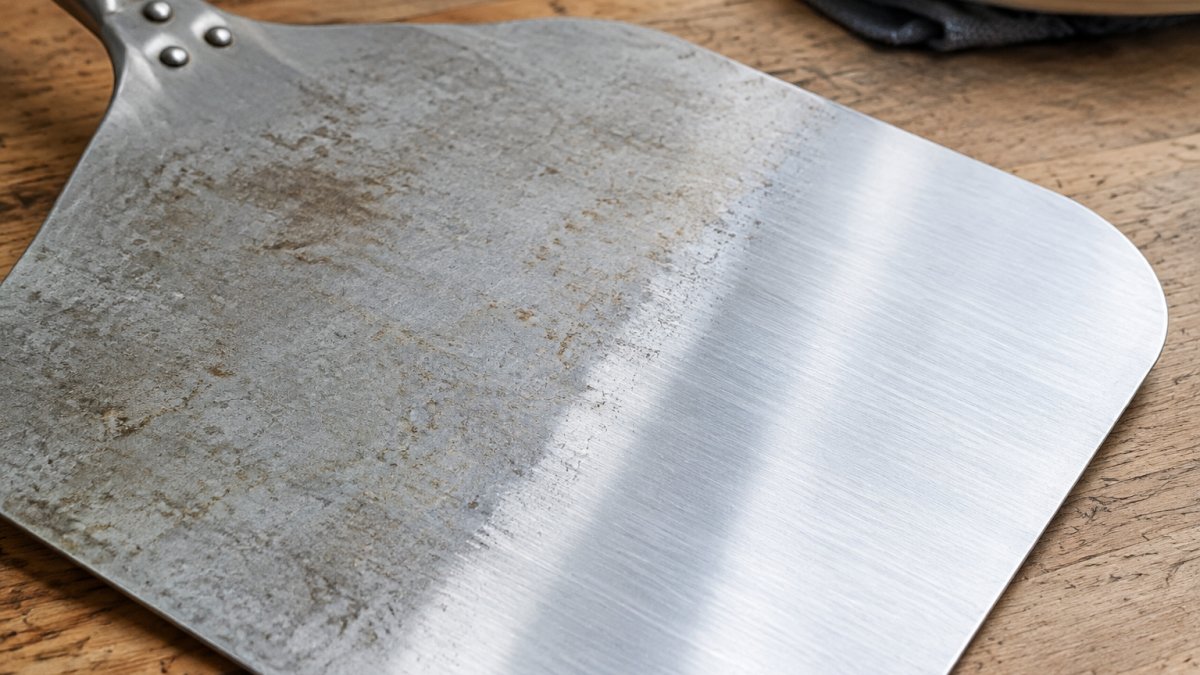
Aluminum develops a dull gray or whitish patina because the metal reacts with oxygen in the air to form a thin aluminum oxide layer.
To restore the finish without harsh chemicals:
- Wash and dry the peel first so you're not polishing over grease.
- Make a paste of baking soda and water, or use a dedicated aluminum polish.
- Rub in small circles with a soft cloth, working one section at a time.
- Rinse, then dry immediately and completely.
- Apply a very thin coat of food-safe mineral oil to slow new oxidation.
A common pattern is that a light polish brings back most of the shine, but deep pitting, small dark craters in the surface, will not polish out. Pitting is a sign the metal has been attacked by acid or chlorine and is a reason to consider replacement.
Scratches and When to Replace
Light surface scratches are cosmetic and don't affect performance. Deep scratches are different: they create grooves where dough, flour, and moisture collect, and they're hard to clean fully, which makes them a food-safety concern over time. Judge a scratch by whether your fingernail catches in it. If it does, clean it thoroughly after every use and monitor it.
Drying, Storing and Maintaining Your Peel for Long Life
Aluminum doesn't rust, but it does corrode, stain, and warp, and almost all of that happens after cleaning, not during it. The two forces at work are moisture and heat. Trapped moisture drives oxidation and pitting; uneven heat and weight drive warping. Handle both and the peel will outlast most of your other kitchen tools.
Drying: The Step Most People Rush
Wipe the peel with a clean towel, then let it air-dry fully before storage, including the edges, the rivets, and the joint where the blade meets the handle. Water hides in those seams and stays there in a closed drawer. A common pattern is spotting that appears days after cleaning, which is simply moisture that was sealed in.
- Dry both sides. Condensation forms on the underside of a peel left flat on a counter.
- Stand it upright or lean it so air reaches both faces.
- Don't stack it wet against another pan or peel.
- Skip the closed bag until the peel is bone dry.
Storage Environment
Humidity is the main long-term threat. A damp basement, a garage, or a cabinet next to a dishwasher gives aluminum a constant film of moisture that slowly dulls and pits the surface.
Temperature matters too. Don't store an aluminum peel in an unheated garage or shed where it swings between freezing and warm, because condensation forms each time the temperature crosses the dew point. And keep heavy pans and skillets off it, aluminum is soft, and a stacked cast-iron pan can bend a thin blade out of flat.
Sanitizing After Raw Dough and Toppings
Cleaning removes debris; sanitizing reduces germs. Most guides skip this, but if your peel has touched raw dough, raw egg wash, or uncooked meat toppings, cleaning alone isn't enough. Wash with hot soapy water, rinse, then sanitize with a food-safe sanitizer mixed to the label's directions, or use a diluted white vinegar wipe and let it air-dry. Don't use bleach on aluminum, chlorine pits the metal. Let the peel dry completely before the next use.
Wooden Handles and Hardware
Wooden handles need different care from the aluminum blade. Don't soak them; wipe with a damp cloth and dry immediately. Once or twice a year, rub a thin coat of food-safe mineral oil into the wood to keep it from drying and cracking. Check the rivets or screws that hold the handle, a loose handle is a wobble that eventually enlarges the hole in the blade. Tighten hardware when you notice play.
A Simple Maintenance Schedule
- After every use: scrape, wash, rinse, dry completely.
- Monthly: inspect for scratches, pitting, and loose hardware; polish light oxidation.
- Seasonally: oil the wooden handle; check storage spot for humidity.
- As needed: replace worn non-stick tarps or damaged parts.
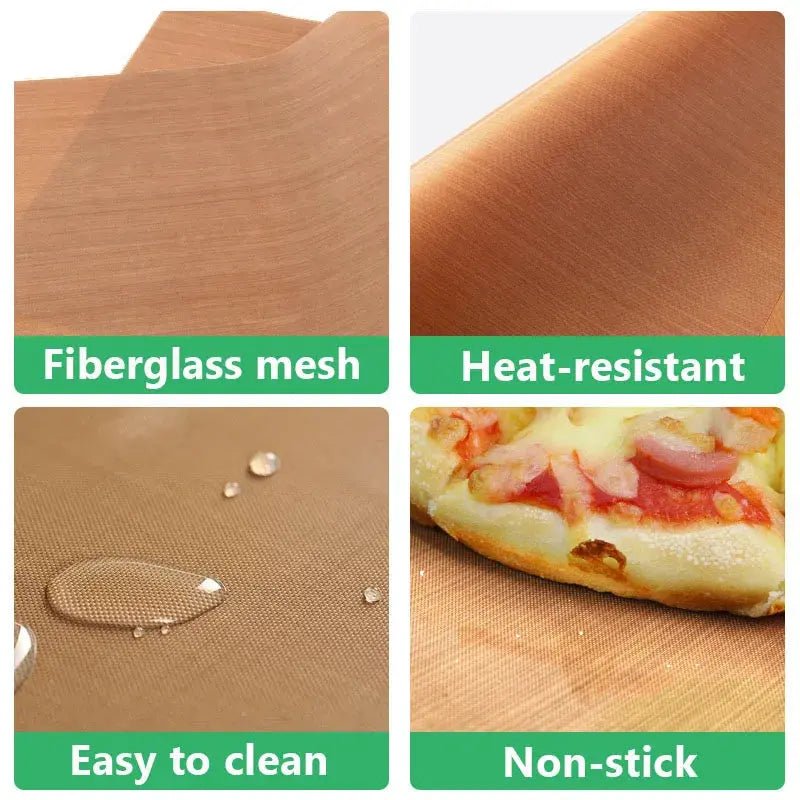
If your peel has replaceable tarps or other parts, check them regularly and swap any that wear out. You can find replacement non-stick tarps for ElitePeel sliding peels for $17.99.
The article recommends a regular maintenance schedule, summarised below.
| When | Task |
|---|---|
| After every use | Scrape, wash, rinse, dry completely |
| Monthly | Inspect for scratches, pitting and loose hardware; polish light oxidation |
| Seasonally | Oil the wooden handle; check storage spot for humidity |
| As needed | Replace worn non-stick tarps or damaged parts |
Choosing Replacement Tarps and Tools for Your Next Pizza Night
Good tools make cleaning easier and help your peel last. ElitePeel offers a few options for pizza tools:
- Replacement high-temperature non-stick tarps ($17.99): fiberglass mesh with a food-safe non-stick coating, made for the Large and XLarge ElitePeel Sliding Pizza Peel.
- Oil brush ($9.99): a simple way to apply oil evenly to the peel surface or to your dough.
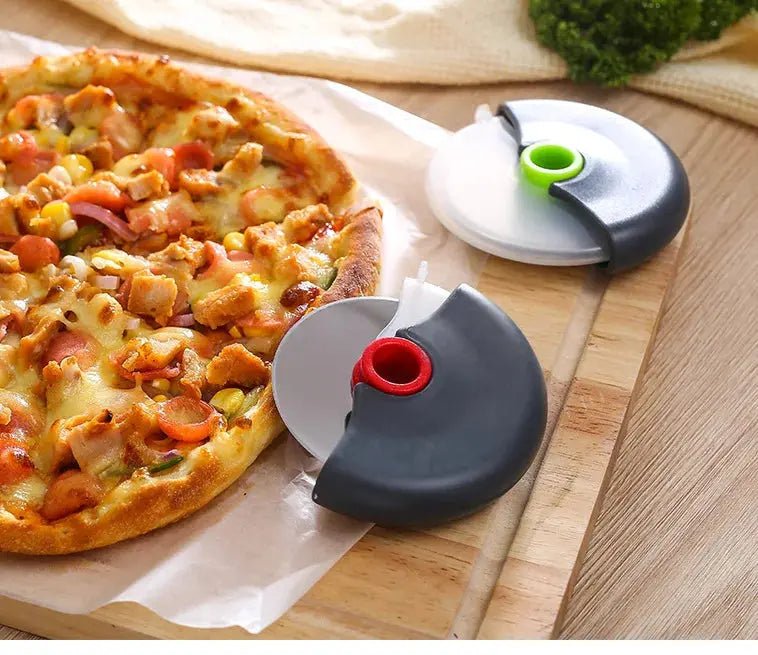
- Stainless steel cutting wheel and oil brush set ($14.99): a stable cutting wheel with an oil brush, useful for slicing and finishing your pizzas.
Pick the tools that match how often you bake.
Clean your peel gently, dry it fully, and it will keep launching pizzas for years. Explore the ElitePeel shop for replacement tarps and tools that help your pizza nights go smoothly.
Frequently Asked Questions
How do you clean a pizza peel?
Wash an aluminum pizza peel by hand with warm water and a few drops of mild dish soap, using a soft sponge rather than an abrasive scrubber. Rinse thoroughly and dry it completely before storing. For dough residue, scrape gently with a bench scraper first, then wipe with a damp cloth to loosen what remains. Avoid soaking the peel for long periods and never use steel wool, which scratches the surface and leaves it more prone to sticking and oxidation over time.
Can you put an aluminum pizza peel in the dishwasher?
Hand washing is the safer choice. Dishwashers use harsh detergents and high heat that can cause oxidation, discoloration and warping, and the cycle can dull the surface finish. Hand-wash with warm water and mild soap, then dry thoroughly. Even if a peel is labeled dishwasher safe, hand washing extends its life and keeps the surface in better condition for launching pizzas without sticking.
How do you remove burnt-on residue from a metal pizza peel?
Lay a damp cloth over the burnt area for several minutes to soften the residue, then wipe gently. For stubborn spots, soak the peel for about five minutes in a 50/50 mix of water and white vinegar with a few spoonfuls of baking soda, then scrub lightly with a soft sponge. Avoid caustic cleaners and abrasive pads, which damage the surface. Rinse and dry completely afterward.
How often should you clean your pizza peel?
Wipe the peel after every use to remove flour and dough residue before it dries and hardens. Do a full wash with mild soap and warm water when it has been used for several pizzas or after a pizza night with toppings that leave residue. Deep cleaning with a vinegar soak is only needed occasionally, when residue or discoloration builds up. Always dry the peel fully before storage.
